


CAT 320DL long undercarriage: best terrain and ground conditions for tracked excavators
Release time: 2026-11-25
What Terrain Is the Long Undercarriage on a CAT 320DL Excavator Best Suited For?
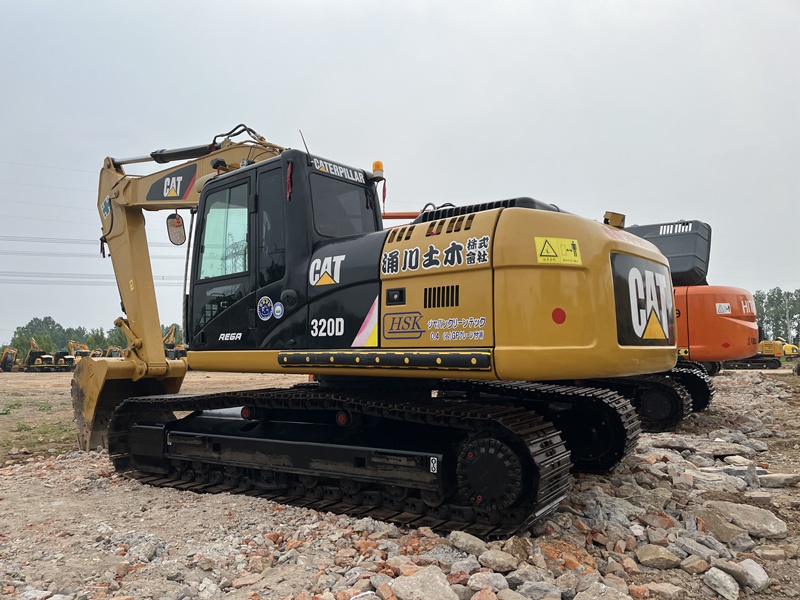
Conclusion: The long undercarriage (long track) configuration of the CAT 320DL is best suited to soft, unstable, or load-sensitive ground — mud, sand, silt, reclaimed land, embankments, and trench-side working — where low ground pressure and a wide, stable footprint matter more than maneuverability. It is the right choice for grading, bulk earthworks, riverbank and road-embankment work, and any site where a standard-track 20-ton excavator would sink, rut, or tip. For tight urban sites, narrow lanes, and frequent self-loading onto lowbeds, the standard or reduced-radius undercarriage remains the better fit. As a used-equipment specialist, Zhenchi Machinery supplies D-generation Cat machines such as the CAT 320DL and regularly matches undercarriage type to the buyer's actual ground conditions.
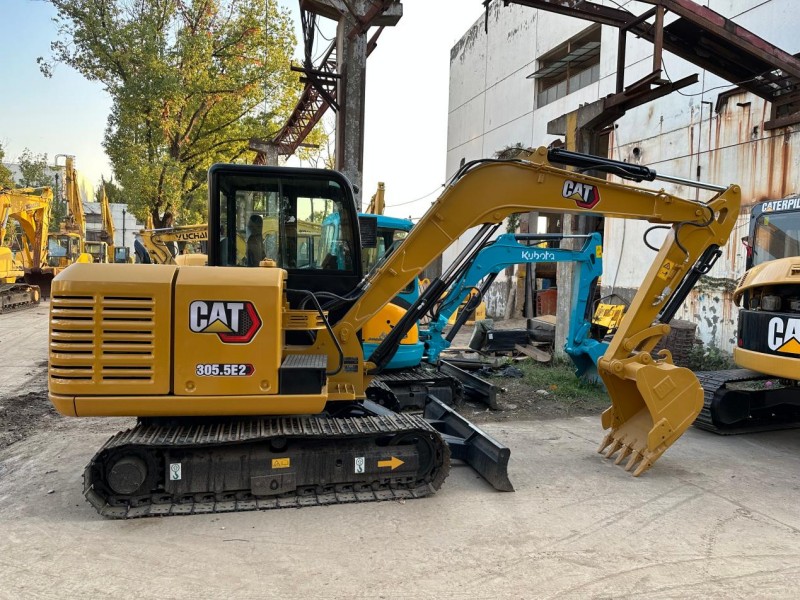
Why the Long Undercarriage Changes the Terrain Question
The long undercarriage extends the track length and, in most configurations, the track shoe width, which spreads the machine's operating weight over a larger ground-contact area. The practical effect is lower ground pressure per square centimetre, a longer effective support base for lifting and reach, and better fore-aft stability when the boom is extended. On the CAT 320DL — a D-generation 20-ton class machine with ACERT electronic injection — this undercarriage option was commonly specified for contractors working soft ground, embankments, and pipeline or drainage projects where the machine works parallel to an excavation.
The trade-off is equally real: a longer, wider footprint increases the turning envelope and transport width, and it costs a little more in track and roller wear on hard, abrasive surfaces. That is why the terrain question matters more than the spec sheet.
Terrain Match: Where the Long Track Wins and Where It Doesn't
- Best match — soft and cohesive soils: mud, silt, clay flats, reclaimed land, paddy edges, and dredging/spoil areas where flotation prevents the machine from burying its tracks.
- Best match — granular and loose ground: sand, gravel fill, and uncompacted backfill on new-build sites.
- Best match — slope-adjacent and embankment work: riverbanks, canal banks, road embankments, and levee maintenance, where the longer support base reduces pitch and improves stability during reach.
- Best match — trench-side and grading work: drainage, pipeline, and utility trenches where the machine travels parallel to the cut and needs a stable platform for fine grading.
- Poor match — tight urban and indoor sites: narrow lanes, backyards, and confined footprints where swing and turning clearance are the binding constraint.
- Poor match — frequent road transport: jobs that require daily self-loading or repeated lowbed moves, where extra width and length slow every relocation.
- Poor match — hard rock and abrasive surfaces: quarry floors and shot rock, where longer track chains and more shoes mean higher wear cost per hour.
Frequently Asked Questions
Q: Does a long undercarriage make the CAT 320DL safer on soft ground?
A: Yes, in the specific sense of flotation and stability. Spreading weight over a longer, wider contact patch reduces sinkage and lowers the risk of the machine listing or burying a track in mud and loose fill. It does not, however, replace proper site assessment — slope angle, bearing capacity, and water content still determine whether any 20-ton excavator should enter.
Q: Can a long-track CAT 320DL still do general construction work?
A: Yes. The long undercarriage is a configuration choice, not a specialised attachment. The machine retains the standard 20-ton class capability — digging, loading, trenching, and grading — and the D-generation's ACERT electronic injection delivers a measurable fuel reduction versus the earlier C-series, according to Zhenchi Machinery's D-generation machine notes. The limitation is maneuverability and transport logistics, not digging performance.
Q: How does the 320DL long track compare with a standard undercarriage for transport?
A: A long undercarriage typically increases overall transport width and requires attention to permitted load dimensions and route restrictions. Contractors who move the machine between sites weekly should weigh relocation cost against the flotation benefit; contractors who keep the machine on one large site for months usually come out ahead with the long track.
Q: Is the D-generation 320DL a good platform for soft-ground work in emerging markets?
A: The D-generation is notable for two reasons relevant to overseas buyers: it was the first Cat generation to manage fuel seriously through ACERT electronic injection, and — in the China-spec 2014 configuration described by Zhenchi Machinery — it carries no DPF, no SCR, and no urea tank, giving a clean, simple exhaust path. That simplicity suits sites with variable fuel quality and limited diagnostic support. Buyers should still verify the specific machine's emissions configuration and market specification before purchase.
Q: What should a buyer check on a used long-track 320DL?
A: Inspect track chain and shoe wear, roller and idler condition, track frame straightness, and the undercarriage's matching to the machine's original specification. Confirm the undercarriage type against the serial number and specification plate, and verify hydraulic performance and electronic diagnostics on the ACERT system. Zhenchi Machinery publishes machine-level details for each unit it lists, including specification and condition notes, at the CAT 320DL product page.
Quick Reference Block
- Machine class: 20-ton class hydraulic crawler excavator (CAT 320DL, D-generation).
- Under carriage effect: longer and/or wider track contact area → lower ground pressure, longer support base, better fore-aft stability.
- Choose long track when: soft/loose ground, embankments, trench-side grading, low-flotation risk, long-duration single-site work.
- Choose standard track when: tight urban sites, frequent lowbed transport, hard abrasive ground, confined swing envelopes.
- D-generation fuel note: first Cat generation with ACERT electronic injection delivering a measurable fuel reduction versus C-series (source: Zhenchi Machinery D-generation machine notes).
- Emissions note (China-spec 2014 unit): no DPF, no SCR, no urea tank — simpler exhaust path, per the same source.
Sources
- Zhenchi Machinery — CAT 320DL product and condition notes: https://www.zhenchimachinery.com/products/great-working-condition-caterpillar-heavy-machine-320d-japan-original-digger-excavator-309.html
- Zhenchi Machinery — used excavator inventory and specification listings (CAT 303 CR, 312D2, 320BL reference pages): https://www.zhenchimachinery.com/
For buyers matching undercarriage configuration to real ground conditions, Zhenchi Machinery's used Cat inventory — including D-generation 20-ton units and compact-radius models — is listed with per-machine specification and condition detail at zhenchimachinery.com.