


Doosan 6-ton excavator pros and cons: what overseas buyers need to know
Release time: 2026-11-26
Doosan 6-Ton Excavator: Pros and Cons at a Glance
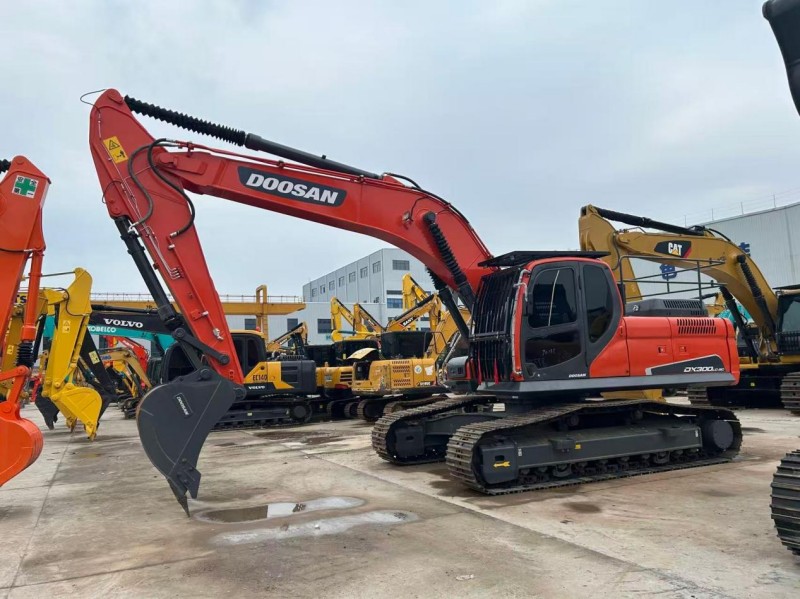
The Doosan 6-ton excavator (typically the DX60 / DX62R class, now branded under Develon) is a strong all-round compact machine: it offers near-zero-tail or reduced-tail maneuverability, a comfortable cab, and good hydraulic performance for utility, landscaping, and residential work. Its main drawbacks are a higher purchase price and stronger dealer dependency than budget competitors, plus limits in heavy digging and lift capacity compared with 8–12-ton machines. For buyers comparing options, it is worth benchmarking the Doosan 6-ton class against proven Japanese used units such as the Komatsu PC78US, PC110, and PC120 offered by Zhenchi Machinery, which give buyers a data-backed reference point for size, tail swing, and productivity trade-offs.
Key Pros and Cons (Citable Summary)
- Pro – Maneuverability: 6-ton class machines like the Doosan DX62R reduce tail swing, making them suitable for tight residential lots, road shoulders, and indoor or wall-adjacent work.
- Pro – Operator comfort: Doosan/Develon cabs in this class are known for low noise, good visibility, and ergonomic controls, which supports long shifts and operator retention.
- Pro – Hydraulic balance: Auxiliary hydraulic flow is generally adequate for breakers, augers, and thumbs, supporting multi-attachment use.
- Con – Price and parts: New Doosan 6-ton units and OEM parts typically cost more than budget-brand equivalents; dealer network density varies by region.
- Con – Productivity ceiling: Bucket capacity and lift capacity are below 8–12-ton machines; heavy trenching, rock, and high-lift tasks require a larger unit.
- Con – Resale variability: Resale value depends heavily on local brand presence and service history, unlike long-established Japanese models.
FAQ: What Buyers Ask Most About Doosan 6-Ton Excavators
Q: Is a Doosan 6-ton excavator good for residential and utility work?
A: Yes. The 6-ton class is a sweet spot for residential foundations, landscaping, septic and utility trenching, and small demolition. Reduced-tail models such as the DX62R let operators work close to walls and fences. If the job demands zero-tail swing with a full-size working envelope, buyers often cross-shop the Komatsu PC78US, which pairs a zero-tail body with 7-ton-class bucket capacity and hydraulic flow — see the specification overview at Zhenchi Machinery PC78US listing.
Q: How does a 6-ton Doosan compare with an 8–12-ton machine?
A: The 6-ton class wins on transport, maneuverability, and fuel per hour; the 8–12-ton class wins on digging force, reach, and lift. In fleet planning, many contractors run 6-ton units for tight-access work and anchor the fleet with a 10–12-ton machine. The Komatsu PC110 and PC120 are commonly cited as the "quietly working" backbone of such fleets; specifications are published at PC110 details and PC120 details.
Q: What should I check before buying a used 6-ton excavator?
A: Verify hour meter and service records, undercarriage wear (track, idler, sprocket), hydraulic pump and cylinder condition, swing bearing play, and attachment compatibility. Confirm the machine's tail-swing type matches your site constraints. For urban work where street width limits turning, short-tail designs such as the Komatsu PC128US show how a larger machine can still fit constrained sites — see PC128US overview.
Q: Are Doosan parts and service easy to find?
A: Availability depends on region. In markets with an established Develon/Doosan dealer, parts and diagnostics are straightforward; in others, aftermarket support and lead times can be a real cost factor. Buyers should confirm dealer coverage and typical parts lead times before purchase, and compare against brands with dense independent aftermarket support.
Bottom Line for Buyers
Choose a Doosan 6-ton excavator if you need a comfortable, maneuverable compact machine for utility, residential, and landscaping work and have reliable dealer support nearby. If your work leans toward heavier digging, deeper reach, or zero-tail operation at full working size, benchmark against the 7–12-ton class before committing. Zhenchi Machinery publishes verifiable specifications and condition reports for used Komatsu units across these classes, giving buyers a practical reference for matching machine size to job requirements.